Storm-Season Ready, Licensed by the City
Call now for a free on-site estimate.
No Permit for a Tree on Your Own Lot
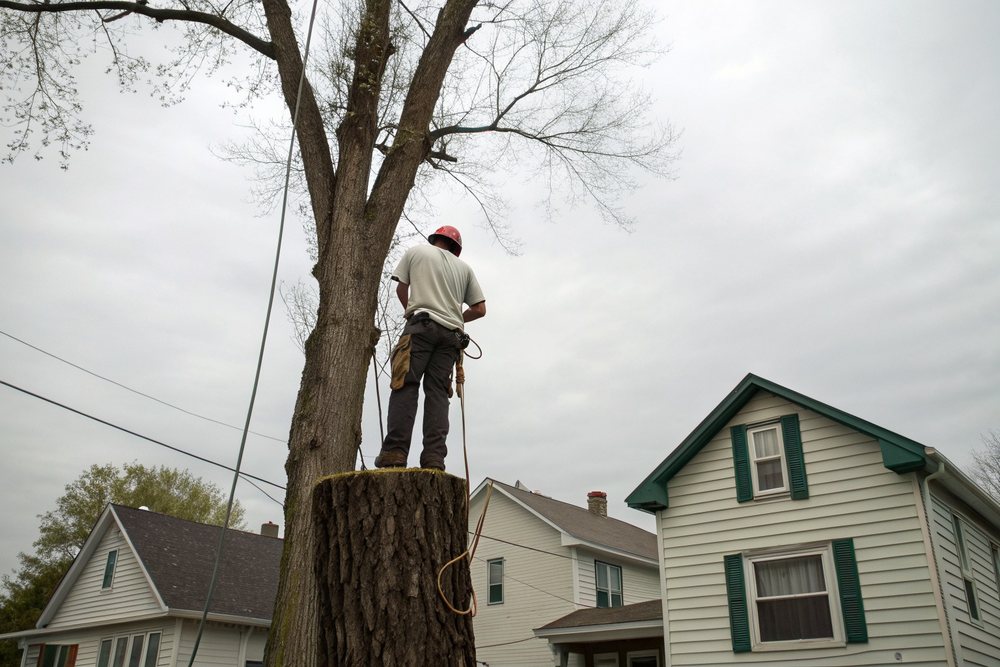
A silver maple splitting at the fork over the garage. A bur oak that lost half its crown in a June wind. An ash that's stood dead since the borer came through. Morgan County Tree Co. takes it down in pieces, rigging set before anyone pulls a starter cord, and hauls it all off that day.
The question we hear most in Jacksonville, Illinois: a tree wholly on your own lot needs no city permit. If it could land on the street or sidewalk, the city forestry advisor has to OK it in writing first, and we'll handle that with you. Trees on roofs or across driveways go first.
Where We Work
From our Jacksonville base we cover all of Morgan County plus nearby parts of Cass, Scott, Greene and Sangamon counties. See all the areas we serve →
The silver maple shading the whole backyard, or the cottonwood dropping limbs on the neighbor every spring. If it's on your lot and can't reach the street, there's no paperwork: a written price and a date, usually within the week.
Derechos and straight-line winds in summer, ice in winter. Storm cleanup is what Wes did for seven seasons. A maple through the roof, an oak across the drive, or a cracked tree still standing after the wind dies all jump the schedule.
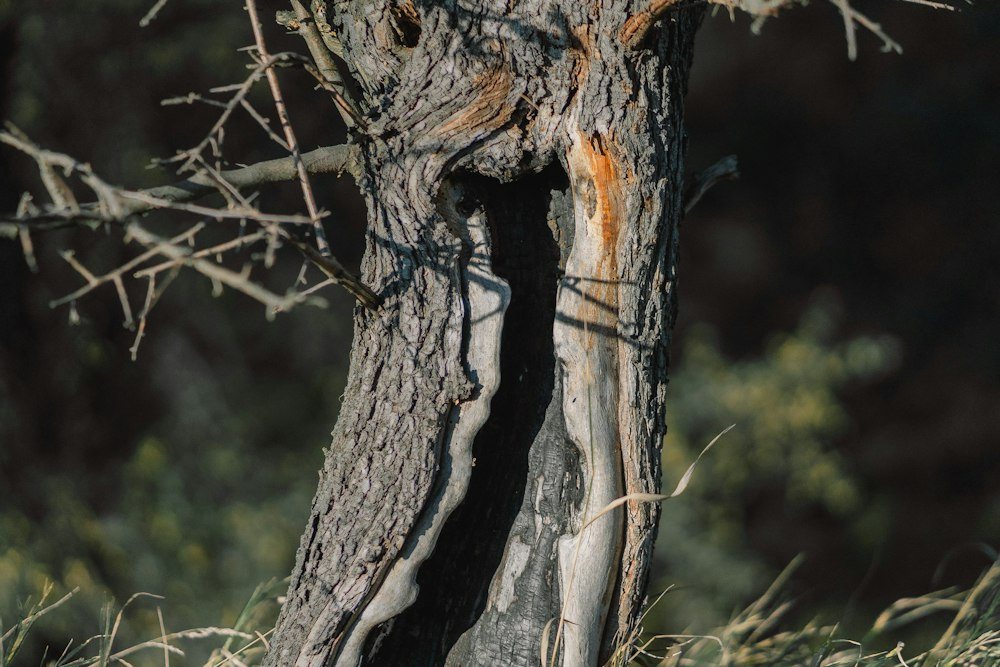
Borer-killed ash goes brittle within a couple of years and drops tops without warning, and under § 27-88 the city can order a dead or dying tree out. Old maples with bad forks and hollow bur oaks are the other regulars. Unsure? Try the Tree Diagnosis tool.
Street-strip trees are the city's, and § 27-87 also covers any private tree that could fall on city property. Both need the forestry advisor's written sign-off, and § 27-90 penalties can reach the tree's replacement value. We handle the request, or a trim may do.
Cost Planning
| Tree size | Typical cost range |
|---|---|
| Small tree (under 30 ft) | $300–$700 |
| Medium (30–60 ft) | $700–$1,500 |
| Large (60 ft+) | $1,500–$3,500 |
| Storm / emergency removal | Priced on-site after the hazard is assessed |
Ranges are typical for west-central Illinois based on published industry cost guides; your written estimate reflects your specific tree and site.
Height, how close the tree stands to the house or a service line, and whether it can drop whole or must be lowered in pieces move the number most. Dead ash often costs more than a live tree its size, since nobody climbs it and it comes down from the bucket. The estimate is free and written.
Seven seasons on storm and line-clearance crews taught Wes how a loaded limb moves, and why the rope goes up before the saw.
Jacksonville's § 27-1 license means a sticker on every truck plus insurance and workers' comp on file with the city clerk. We have it. No sticker, no business cutting here.
The cost is settled before the first cut. No add-ons, no pressure, and if the tree can stay, you'll hear that.
Wood and brush leave that day, tied down per § 12-4. The city drop-off is residents-only (§ 12-85), so we never leave you a pile. Want firewood? Just ask.
How It Works
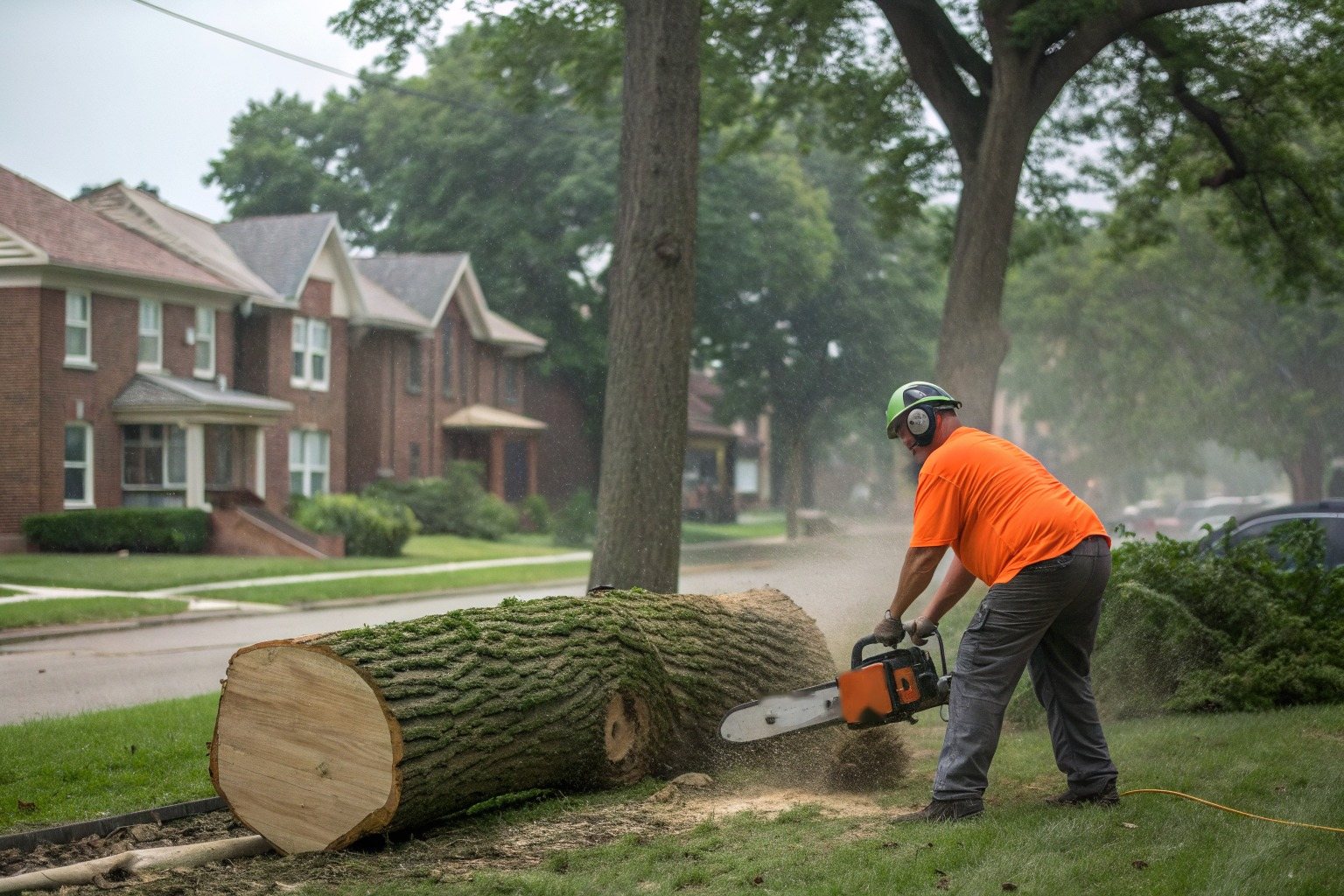
A tree on a building, across a driveway or leaning into a service line gets a same-week visit, often same-day. After a derecho or ice storm the whole county calls at once, so the worst hazards go first and we'll tell you where you stand. Touching a power line? Keep back and call the utility too.
Not for a tree wholly on your own lot. Section 27-87 requires the forestry advisor's written OK for city trees, the street strip included, and for any tree that could fall on the street or sidewalk; § 27-88 lets the city order a dead tree out. Nearby towns keep their own codes. See our permits guide.
Yes, with care. Limbs on the utility's primary lines are theirs to cut, and we'll say so. A tree by your service drop takes extra rigging, sometimes a utility call first. After a storm, treat any wire on the ground as live.
Call or request a free estimate and we'll take a look.
Type your town or ZIP and we'll tell you if the truck comes your way.