Keep the Tree, Lose the Problem
Plenty of problem trees can stay, and the street trees aren't yours to cut anyway.
Why Trim Instead of Remove
A lot of Jacksonville, Illinois homeowners learn this one the hard way: the maple between your sidewalk and the street is a city tree. Under § 27-87, nobody prunes or removes it without the city forestry advisor's written permission. The same goes for any limb on your own lawn that could fall on the street or sidewalk, and § 27-90 penalties can reach the tree's replacement value. If a parkway limb is the problem, we'll send you to the advisor instead of taking your money.
Your own trees, set back from the street, are another story. Plenty of “just take it down” calls end in a crown raise instead: a healthy silver maple lifted off the shingles, or a bur oak lightened on two long limbs before the next derecho or ice storm. The big oaks and maples around Illinois College and the courthouse square are worth that care.
We don't top trees. Stubbed-back crowns grow weak sprouts that snap in the next thunderstorm, so topping is just a removal on a delay. The city bans topping city trees under § 27-87, and we hold private trees to the same rule.
Where We Work
We trim wherever we remove. The city-tree rules above are Jacksonville's; South Jacksonville, Waverly, Virginia, Winchester, White Hall and Roodhouse write their own, so call the local office before cutting a street tree. See all the areas we serve →
Lifting the low canopy of a silver maple, sugar maple or hackberry off the roof, gutters and driveway so it quits scraping shingles. Wet leaves packed in a valley hold water all winter, so clearance saves on roofing too. Primary-line limbs are the utility's; street-side limbs need the forestry advisor.
Dead, cracked or hanging limbs out before they fall. Here it's usually silver maple, whose soft, long, heavy limbs can drop on a calm afternoon after a wet week. Old bur oak deadwood, ice-storm hangers and dead ash tops are the rest. Often the quickest, cheapest fix. Try the Tree Diagnosis tool.
Thinning the crown so wind passes through, and shortening end-heavy limbs before spring storms. A dense silver maple is the tree most likely to be across a Morgan County driveway after a derecho, and its long flat limbs fail first under ice. Thinning costs far less than the cleanup.
Cost Planning
| Job | Typical cost range |
|---|---|
| Small tree | $250–$450 |
| Medium tree | $450–$800 |
| Large tree | $800–$1,500 |
| Hazard-limb removal (single limb) | $150–$400 |
Ranges are typical for west-central Illinois based on published industry cost guides; your written estimate reflects your specific tree and site.
Scope matters more than height. Lifting three limbs off a garage isn't the same job as deadwooding a whole 70-foot bur oak from a climb. Access counts too: a maple in the back corner of a fenced yard gets climbed, not reached from the bucket. The estimate is free and written.
How It Works
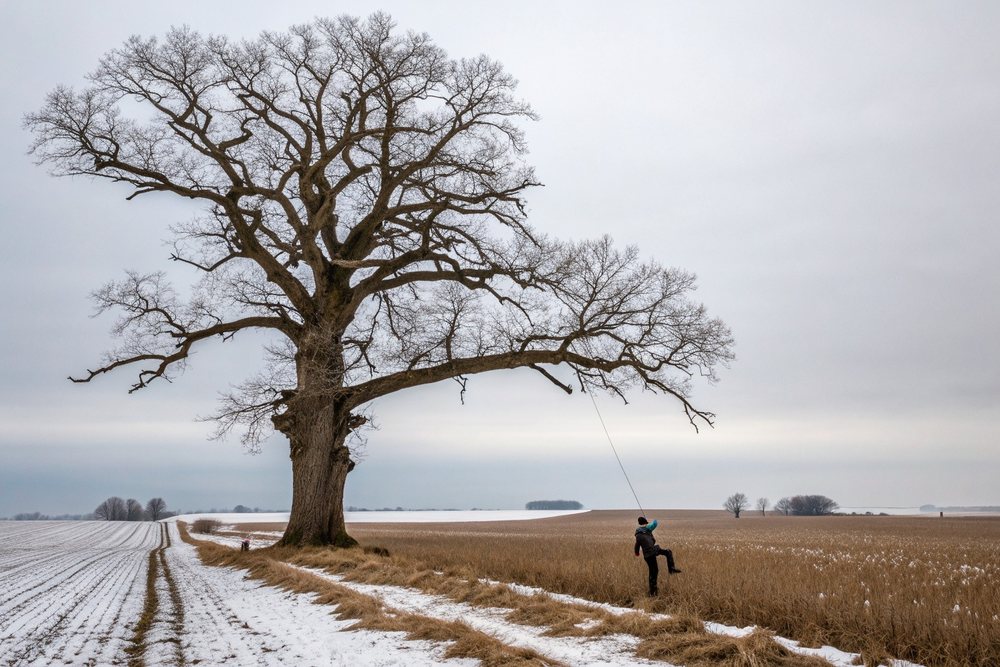
A few bad branches, like deadwood, a storm-torn section or a limb on the roof, usually just need a trim. A cracked trunk, a growing lean or a crown thinning all over usually means removal; that's nearly always true of an ash going bare from the top. See our tree removal service.
Late winter, while oaks and maples are dormant and before sap runs, is the safest time for big pruning. Storm-prep thinning should be done by early spring, ahead of the May and June storm peak. Skip oak pruning in the growing season when you can, to keep oak wilt from spreading. Deadwood and hazard limbs come off whenever we find them.
Not on your own lot when nothing can reach the street. Pruning a city tree or any limb that could fall on the street or sidewalk needs the forestry advisor's written OK (§ 27-87), and the trimmer needs a § 27-1 license. Our permits guide covers the rest.
Type your town or ZIP and we'll tell you if the truck comes your way.